

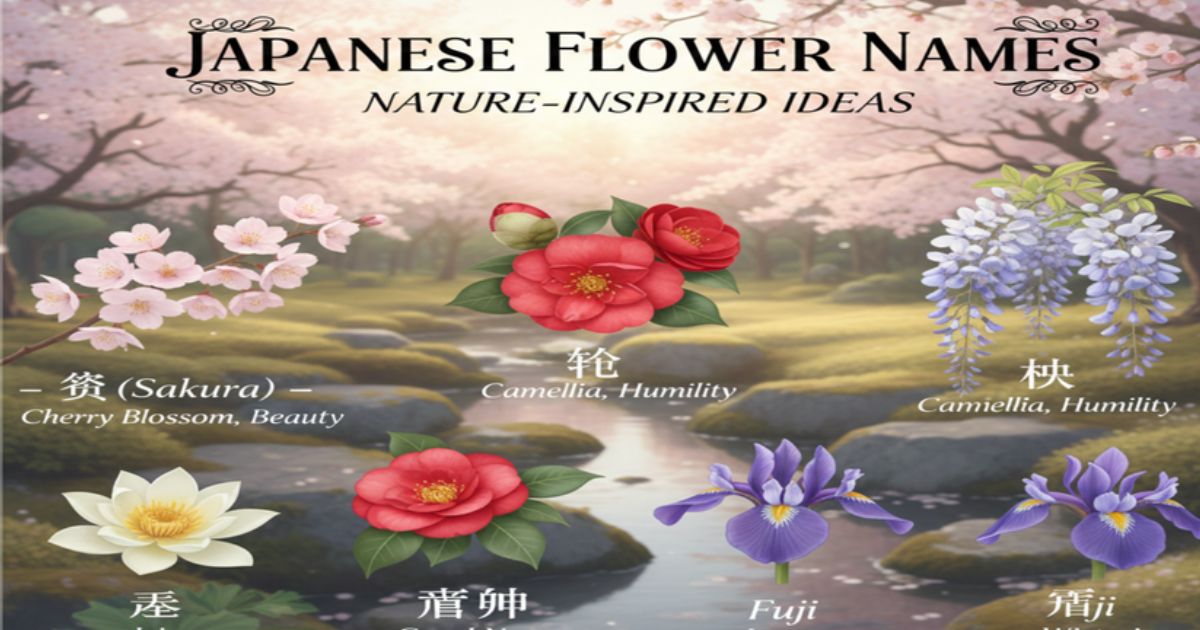
Japanese flower names with meanings are deeply connected to nature, seasons, and emotions. In Japanese culture, flowers are more than just beautiful plants—they symbolize feelings, life stages, and spiritual values. Many of these names are inspired by cherry blossoms, wildflowers, and seasonal blooms found across Japan. Because of their poetic meanings, Japanese flower names are often used for baby names, character names, and artistic inspiration. Each flower carries a story rooted in tradition and symbolism. Some represent love and beauty, while others express strength, purity, or renewal. These names feel elegant, timeless, and naturally aesthetic. Nature plays a huge role in shaping Japanese naming culture. Exploring these flower names helps you understand Japan’s deep respect for the natural world.
Japanese Pretty Flower Names
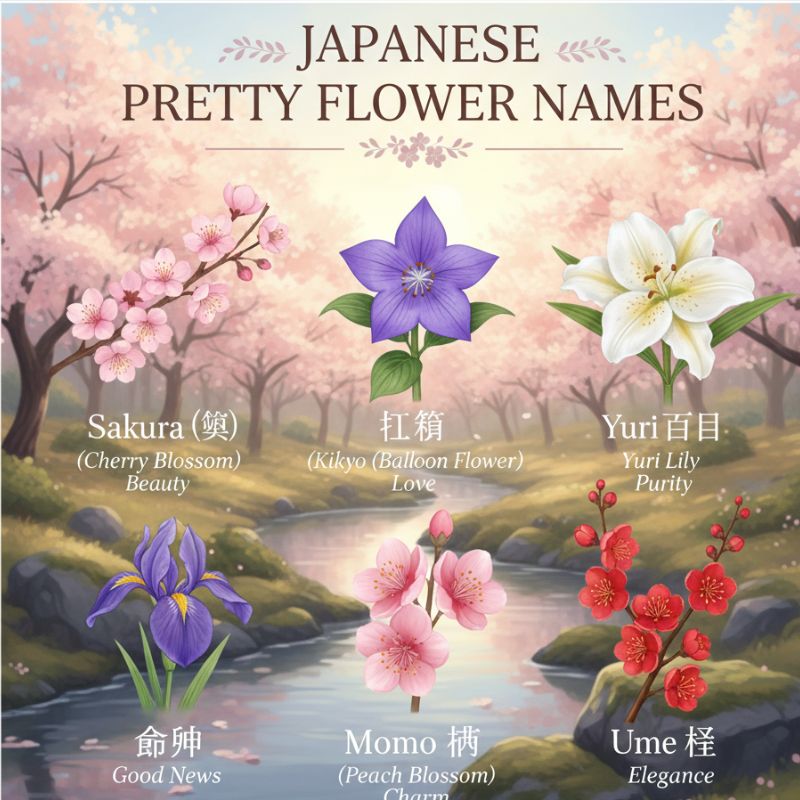
- Sakura
- Ume
- Himawari
- Ayame
- Yuri
- Tsubaki
- Sumire
- Momo
- Ran
- Botan
- Kiku
- Fuji
- Nadeshiko
- Asagao
- Hana
- Mitsuba
- Shion
- Kikyo
- Mizuki
- Tachibana
- Hozuki
- Suzuran
- Hotaru
- Kazahana
- Nanohana
- Aoi
- Koharu
- Hibiki
- Chigusa
- Momiji
- Haruka
- Karin
- Yuzuka
- Satsuki
- Misaki
- Hoshimi
- Fubuki
- Akari
- Hiyori
- Nozomi
- Rikka
- Sora
- Hinata
- Tsukiko
- Kohana
- Amane
- Sayuri
- Yukina
- Miori
- Aika
Japanese Nice Flower Names
- Sakura
- Ume
- Ayame
- Yuri
- Tsubaki
- Sumire
- Momo
- Ran
- Botan
- Kiku
- Fuji
- Nadeshiko
- Asagao
- Hana
- Shion
- Kikyo
- Mizuki
- Tachibana
- Hozuki
- Suzuran
- Nanohana
- Aoi
- Chigusa
- Momiji
- Karin
- Satsuki
- Misaki
- Hiyori
- Nozomi
- Rikka
- Haruna
- Akane
- Fuyuka
- Yukari
- Hoshino
- Kazumi
- Miyuki
- Shizuka
- Minori
- Ayaka
- Emi
- Himari
- Konomi
- Yui
- Rin
- Mai
- Kaori
- Natsumi
- Reina
- Airi
Japanese Good Flower Names
- Sakura
- Ume
- Ayame
- Yuri
- Tsubaki
- Sumire
- Botan
- Kiku
- Fuji
- Ran
- Nadeshiko
- Asagao
- Momo
- Hana
- Shion
- Kikyo
- Nanohana
- Tachibana
- Hozuki
- Suzuran
- Mizuki
- Aoi
- Chigusa
- Karin
- Satsuki
- Misaki
- Himawari
- Akane
- Fuyuka
- Yukari
- Hiyori
- Rikka
- Haruna
- Minori
- Shizuka
- Ayaka
- Himari
- Konomi
- Kaori
- Natsumi
- Reina
- Airi
- Momoka
- Hanabi
- Kohana
- Suiren
- Tsuyukusa
- Utsugi
- Kuchinashi
- Obana
- Ominaeshi
Read more: Japanese Flower Names with Meanings: Nature-Inspired Name Ideas
Japanese Beautiful Flower Names
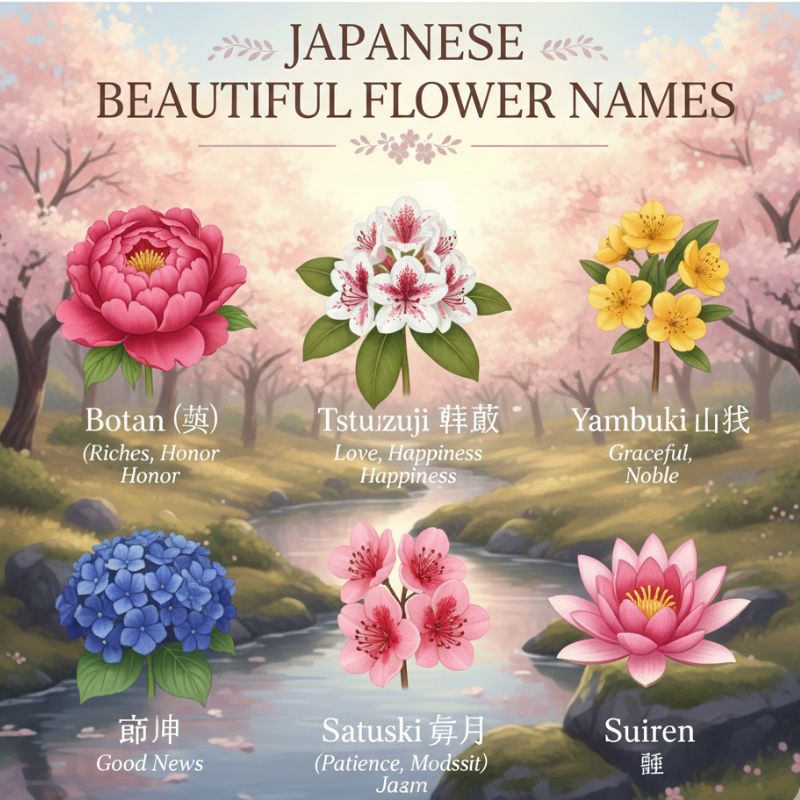
- Sakura
- Ume
- Ayame
- Yuri
- Tsubaki
- Sumire
- Ran
- Botan
- Kiku
- Fuji
- Nadeshiko
- Asagao
- Hana
- Momo
- Shion
- Kikyo
- Nanohana
- Tachibana
- Hozuki
- Suzuran
- Mizuki
- Aoi
- Chigusa
- Karin
- Satsuki
- Misaki
- Himawari
- Akane
- Fuyuka
- Yukari
- Hiyori
- Rikka
- Haruna
- Minori
- Shizuka
- Ayaka
- Himari
- Konomi
- Kaori
- Natsumi
- Reina
- Airi
- Momoka
- Hanabi
- Kohana
- Suiren
- Tsuyukusa
- Utsugi
- Kuchinashi
- Obana
- Ominaeshi
Japanese Best Flower Names
- Sakura
- Ume
- Ayame
- Yuri
- Tsubaki
- Sumire
- Ran
- Botan
- Kiku
- Fuji
- Nadeshiko
- Asagao
- Himawari
- Momo
- Shion
- Kikyo
- Nanohana
- Tachibana
- Hozuki
- Suzuran
- Mizuki
- Aoi
- Chigusa
- Karin
- Satsuki
- Misaki
- Akane
- Fuyuka
- Yukari
- Hiyori
- Rikka
- Haruna
- Minori
- Shizuka
- Ayaka
- Himari
- Konomi
- Kaori
- Natsumi
- Reina
- Airi
- Momoka
- Hanabi
- Kohana
- Suiren
- Tsuyukusa
- Utsugi
- Kuchinashi
- Obana
- Ominaeshi
- Yamabuki
- Fujibakama
- Hototogisu
- Shakuyaku
- Kinkaisou
Japanese Attractive Flower Names
- Sakura
- Ume
- Ayame
- Yuri
- Tsubaki
- Sumire
- Ran
- Botan
- Kiku
- Fuji
- Nadeshiko
- Asagao
- Himawari
- Shion
- Kikyo
- Nanohana
- Tachibana
- Hozuki
- Suzuran
- Aoi
- Chigusa
- Suiren
- Kuchinashi
- Utsugi
- Tsuyukusa
- Ominaeshi
- Yamabuki
- Fujibakama
- Shakuyaku
- Hototogisu
- Kinkaisou
- Mizubasho
- Kanokoyuri
- Hamanasu
- Hagi
- Kibana
- Yomena
- Mitsuba
- Akebia
- Kinsenka
- Benibana
- Ajisai
- Hirugao
- Tsukimi
- Hoshikusa
- Shirayuri
- Kazaguruma
- Hakone
- Murasaki
- Shobu
- Kikyosou
- Torenia
FAQs
Why are Japanese flower names so meaningful?
Japanese flower names are meaningful because they are closely tied to cultural symbolism, seasons, and emotions. In Japan, flowers represent feelings like love, hope, strength, and renewal. Many flowers are celebrated through festivals and traditional poetry, giving them deeper emotional value. This cultural connection makes flower names feel poetic and timeless. Each name often reflects a specific trait or life lesson.
Are Japanese flower names used as personal names?
Yes, Japanese flower names are commonly used as personal names, especially for girls, but some are unisex as well. Parents choose these names because they sound gentle and carry beautiful meanings. Flower-based names are also popular in anime, manga, and literature. They symbolize elegance, purity, and natural beauty. Many people outside Japan also use them for inspiration.
Do Japanese flower names change meaning by season?
Yes, seasons play an important role in Japanese culture, and flower meanings can change slightly depending on when they bloom. For example, cherry blossoms symbolize beauty and the shortness of life because they bloom briefly in spring. Autumn flowers often represent maturity and reflection. Seasonal awareness adds depth to flower names. This makes them even more special and symbolic.
Are Japanese flower names good for baby names?
Japanese flower names are a great choice for baby names because they are meaningful, gentle, and nature-inspired. They often symbolize positive qualities like kindness, strength, and beauty. These names also feel unique yet timeless. Many parents love them for their cultural depth and elegant sound. They work well across different cultures too.
What makes Japanese flower names unique compared to others?
Japanese flower names are unique because they combine nature, language, and cultural philosophy. Unlike simple floral names, they often carry layered meanings based on kanji characters. Each kanji adds depth and symbolism to the name. This creates a strong emotional and cultural connection. The result is a name that feels artistic and deeply meaningful.
Conclusion
Japanese flower names with meanings offer a perfect blend of beauty, culture, and nature. Each name reflects emotions, seasons, and timeless values passed down through generations. Whether you are searching for a unique name, learning about Japanese culture, or simply love floral symbolism, these names feel meaningful and inspiring. Nature-inspired names never go out of style and always feel peaceful. Japanese flower names especially stand out for their poetic depth and elegance. They remind us of the quiet beauty found in nature and tradition.
