

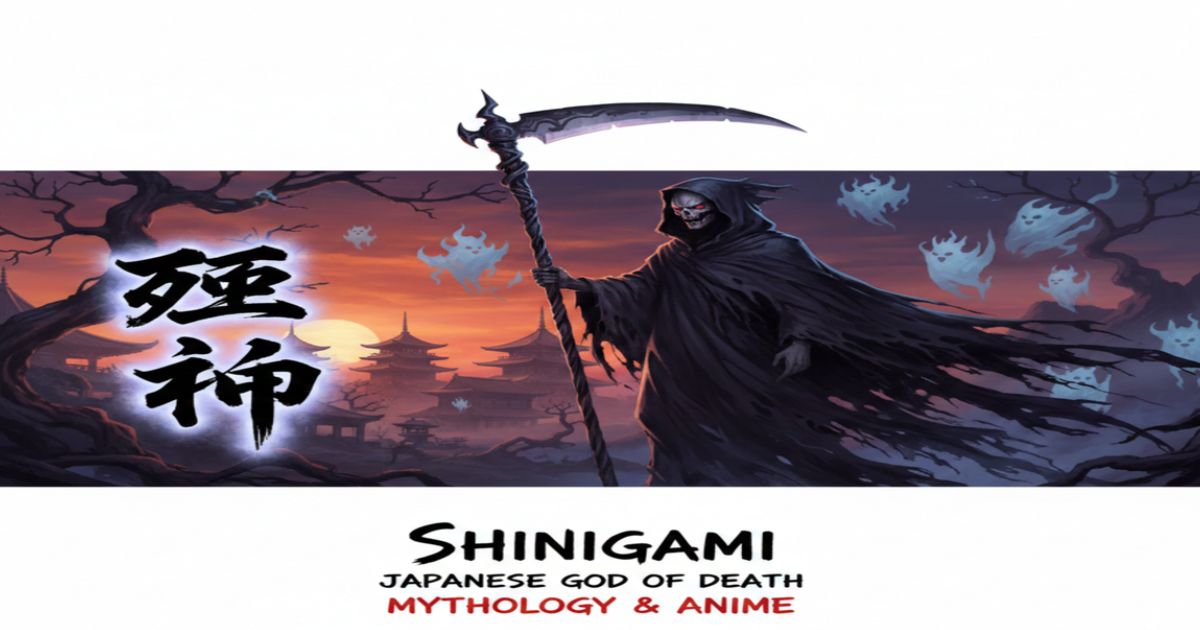
Shinigami, often called the Japanese God of Death, is a mysterious and powerful figure deeply rooted in Japanese mythology and folklore. Unlike Western death gods, Shinigami are not always evil but serve as guides between life and death. Over time, their image evolved from traditional folklore into popular modern culture. Today, Shinigami are widely recognized through anime, manga, and Japanese pop media. They are often portrayed as supernatural beings who influence human fate. Some Shinigami bring death, while others escort souls peacefully. This dual nature makes them both feared and respected. Their symbolism reflects humanity’s complex relationship with mortality. Shinigami continue to fascinate audiences worldwide.
Amazing Shinigami Japanese Names

- Yami
- Kuro
- Rei
- Shin
- Kage
- Mori
- Enma
- Onyx
- Kiri
- Zan
- Hakai
- Yoru
- Akuma
- Sora
- Kuroshi
- Meido
- Rin
- Tsume
- Ketsu
- Oboro
- Shura
- Kiba
- Gin
- Tatsu
- Kuroto
- Zetsu
- Rai
- Fudo
- Kamon
- Kuroya
- Mugen
- Jin
- Higan
- Byaku
- Kurou
- Sabi
- Roku
- Nox
- Kuroen
- Yasha
- Izan
- Kageo
- Shido
- Raiko
- Kuron
- Zanma
- Meika
- Sei
- Guren
- Kurokai
Good Shinigami Japanese Names
- Reito
- Kuroya
- Shinra
- Meiro
- Yukari
- Kagemi
- Enji
- Miro
- Sairo
- Hiraku
- Kuroha
- Yoruto
- Aomi
- Shinka
- Meisa
- Raito
- Kairo
- Sumiya
- Kiyori
- Hoshin
- Rimori
- Kuroki
- Senri
- Yomari
- Airo
- Kensai
- Morika
- Yukito
- Saika
- Kurose
- Mitsuro
- Shiori
- Renji
- Kairoku
- Hinari
- Atsumi
- Kuroto
- Sairen
- Yamori
- Meiri
- Rikuto
- Kuroka
- Neriko
- Tsubaki
- Hiroki
- Seira
- Kumori
- Yorika
- Misora
- Kanri
Beautiful Shinigami Japanese Names
- Aira
- Miyori
- Kiyomi
- Hoshika
- Yumeko
- Sairi
- Mirei
- Akari
- Nozomi
- Shizuka
- Kohana
- Ririka
- Ayame
- Tsukimi
- Hikari
- Misaki
- Sakura
- Nerisa
- Fuyumi
- Hanari
- Komori
- Seika
- Yurina
- Amane
- Kisara
- Momiji
- Asumi
- Reika
- Himari
- Kanna
- Suzume
- Marika
- Aoi
- Nanami
- Chihiro
- Kureha
- Saori
- Emika
- Riona
- Mizuki
- Tsubame
- Harumi
- Yoshimi
- Kairi
- Minori
- Shion
- Kotomi
- Maiya
- Rumi
- Hoshimi
- Yua
- Kasumi
Read more: Shinigami Japanese God of Death Meaning Mythology and Anime
Attractive Shinigami Japanese Names

- Aizen
- Reon
- Kuroshi
- Yorai
- Shinka
- Meito
- Raisen
- Kageya
- Soren
- Kairo
- Zairo
- Miretsu
- Yamito
- Seirin
- Kuroya
- Atsuro
- Renka
- Hiyori
- Kuroen
- Taiga
- Raito
- Kenshiro
- Mizora
- Shiroku
- Yukari
- Kaien
- Sairu
- Gaiya
- Kuroha
- Nairo
- Shidou
- Reiji
- Katsuro
- Kiyoto
- Hoshin
- Morito
- Enrai
- Kuroki
- Aomi
- Raizen
- Jiroku
- Kairen
- Sumiro
- Kensai
- Yamori
- Seito
- Kuroto
- Rensai
- Airo
- Meirin
- Hiroto
- Kageo
- Yoruto
- Saizen
Best Shinigami Japanese Names
- Enma
- Yami
- Kuro
- Rei
- Kage
- Meido
- Higan
- Yoru
- Shin
- Oboro
- Shura
- Kuroto
- Rin
- Zan
- Ketsu
- Kiri
- Yasha
- Fudo
- Jin
- Rai
- Gin
- Mugen
- Byaku
- Zetsu
- Kamon
- Sabi
- Tatsu
- Kiba
- Izan
- Raiko
- Sei
- Guren
- Hakai
- Kuroya
- Shido
- Kuroen
- Zanma
- Kuroshi
- Meika
- Roku
- Kurou
- Yamori
- Hoshin
- Raizen
- Seiren
- Kurokai
- Kuron
- Hiroku
- Yomari
- Enrai
- Kageo
Pretty Shinigami Japanese Names
- Aimi
- Yuriko
- Miori
- Hoshina
- Kisaki
- Ririka
- Ayumi
- Shinomi
- Koyuki
- Hanami
- Satsuki
- Emiri
- Kanon
- Mitsuki
- Airi
- Chisaki
- Natsumi
- Koharu
- Rinori
- Yumina
- Fumika
- Kiyoka
- Maho
- Noa
- Reina
- Saki
- Uta
- Mizuna
- Hina
- Akane
- Serika
- Yua
- Mai
- Shiori
- Aoiha
- Konomi
- Risa
- Tomomi
- Yukina
- Arisa
- Nanoka
- Misora
- Kae
- Rumiya
- Suzu
- Hiyoka
- Momoka
- Rino
- Kisumi
- Ayaka
- Hoshino
FAQs
What does Shinigami mean in Japanese
Shinigami is a Japanese word made from two parts: “shini” meaning death and “kami” meaning god or spirit. Together, Shinigami translates to “god of death” or “death spirit.” However, Shinigami are not a single god but a category of supernatural beings. Their role is often to invite, guide, or influence humans toward death. In folklore, they can be subtle spirits rather than physical beings. The meaning changes depending on cultural and modern interpretations.
Are Shinigami evil in Japanese mythology
Shinigami are not always evil in traditional Japanese belief. They are often neutral beings who perform necessary cosmic duties. Their purpose is to maintain balance between life and death. Some stories portray them as temptations leading humans to death, while others show them as guides for souls. Unlike demons, Shinigami do not usually punish humans. Their actions depend on fate rather than cruelty.
Is Shinigami a real god in Japanese religion
Shinigami are not officially worshipped like Shinto gods such as Amaterasu. They emerged mainly in folklore and Edo-period literature. Japanese religion traditionally avoided personifying death as a single deity. Instead, death was seen as a natural process. Shinigami became popular later through storytelling and cultural evolution. Today, they are more symbolic than religious figures.
How are Shinigami shown in anime and manga
In anime and manga, Shinigami are often given human-like personalities and dramatic roles. Famous examples include Death Note and Bleach. These portrayals mix mythology with creative storytelling. Shinigami in anime may judge souls, use special weapons, or live in separate realms. They often reflect moral dilemmas and philosophical themes. This modern portrayal has made Shinigami globally popular.
What is the difference between Shinigami and Western death gods
Western death gods like the Grim Reaper are usually singular and final. Shinigami, however, exist as multiple beings with different roles. They are not always visible or physically active. Western death figures often represent fear, while Shinigami can symbolize guidance and fate. Japanese culture treats death more spiritually than judgmentally. This makes Shinigami conceptually different from Western counterparts.
Conclusion
Shinigami represent a unique interpretation of death in Japanese culture. Rather than being purely destructive, they symbolize transition and balance. From ancient folklore to modern anime, their role has constantly evolved. Anime has reshaped Shinigami into relatable and dramatic characters. This blend of tradition and creativity keeps their legend alive. Shinigami remain a powerful symbol of life, death, and destiny.
